The First Quarto (Q1) of Hamlet has been daring us and me for quite some time. Longer, even, than my interview with Ryan Hudak last year might have implied. Q1 Hamlet was re-discovered in 1823, and it's been forcing us to rethink what we "know" about Shakespeare ever since. Q1 Hamlet cracked open the possibilities of Shakespeare as a reviser of his plays, or as an adapter of other plays, or of the possibility that the printed texts of early modern England might, in some way, contain a record of performance.
Q1 Hamlet also brought with it the possibility of a performance script of the great tragedy that was, to use the phrase of Ann Thompson and Neil Taylor, "rough and ready" for performance. Whereas Hamlet has been held up as one of the greatest literary achievements and performance challenges in the western canon, Q1 Hamlet eschews onanistic existentialism for a youthful vitality that makes Hamlet's depression seem all the more unnatural.
And yet we've held off on it. Until now, at least.
The reasons not to do Q1 Hamlet have been strong: of all the bad quartos, it is the best known, and the most often performed, and we have sought, since our founding, to explore the texts that have been relegated to editorial footnotes for most of the past few centuries. Also, and I'm going to be completely honest here, Hamlet is a little bit intimidating: everyone has some idea about what Hamlet, Ophelia, Gertrude, and Polonius look, sound, and smell like: if the text of Hamlet is a marathon, than the critical commentary is a race around the world.
Of course, Ophelia is Ofelia, Gertrude is Gertred, and Polonius is Corambis in the Q1 Hamlet, and the eponymous melancholy Dane is still not quite the character we know. Nothing stands the critical commentary of Hamlet on its head like Q1, and at a time when theatre companies are increasingly turning to the classics to find meaning in our post-modern world, there's Q1 Hamlet, the first, best reminder that we don't know this Shakespeare fellow nearly as well as we like to imagine. It's a message in a bottle from 1603 that forces us to confront that ‘to be or not to be’ is not necessarily a question at all, and invites us to admit a wider array of responses..
I can think of no better offering to begin Bad Quarto Productions' first ever season of plays, and an offering for the year long Shakespeare 400 celebrations than Q1 Hamlet.
We've barely started on Hamlet at the moment. Pretty soon, we'll be back to you with updates about our Hamlet company, along with a host of other information about the play and the process of making it (both in 1603 and 2016), but if you're interested in beating the rush, tickets are on sale now at http://badquartohamlet.bpt.me/.
Wednesday, February 3, 2016

Monday, January 18, 2016
Bad Quarto Productions Announces our 2016 Season!
2015 was a great year for Bad Quarto Productions: we produced more work at a higher quality than we have in years prior, and were able to bring original staging and original texts to more audiences than ever with our productions of The Taming of a Shrew and The Second Shepherds’ Play. We incorporated in the State of New York as a not-for-profit company (Bad Quarto Productions, Inc), became a member of the Shakespeare Theatre Association, and have worked hard to broaden our reach within our communities: both online and offline. And we’re looking forward to an even better 2016!
2015 went so well that, for the first time since our founding in 2010, Bad Quarto Productions can plan years into the future instead of from one project to the next, and we are happy to announce what I hope will be our first ever regular season of plays for 2016. We’re pleased to offer a season of plays that speaks to the core of our mission….
Hamlet (The First Quarto)
 by William Shake-speare
March 26 - April 10 -- “To be, or not to be, Ay there's the point,”
It’s possible that no play stands for Shakespeare as well as Hamlet, but before Hamlet was HAMLET, it was printed in 1603 as “THE Tragicall Historie of HAMLET Prince of Denmarke By William Shake-speare,” with performances advertised in London, Oxford, Cambridge, and elsewhere. But this version of the play differs considerably from the later ones printed in quarto form in 1604, and in the Folio in 1623, and offers us a glimpse into the Hamlet that debuted sometime in the last days of the 16th century or the first days of the 17th. We’re excited to bring to life the earliest stage version of one of the greatest dramatic works ever written.

What, Lamb! What, Ladybird!
by Charlene V. Smith
Summer -- “What light through yonder window breaks?”
If Hamlet is Shakespeare’s greatest tragic hero, it’s easy to make the case that Juliet is his greatest tragic heroine. In this unique examination of four centuries of performance and scholarship, actress and Artistic Director of the Washington DC based Brave Spirits Theatre Charlene V. Smith explores our conflicting relationship with a character who is at once an impulsive girl and a courageous woman creating her own future. Smith explores whether we should consider Juliet a warning or a role model.
The Life and Death of Jack Straw
 by anonymous
Fall -- “When Adam delved and Eve span, Who was then the gentleman?”
King Richard II had one of the most tumultuous reigns of any king in English history, but before he was deposed by his cousin Henry Bolingbroke in events Shakespeare dramatized in Richard II, he was very nearly killed in progressive peasant rebellion. Written during a period of famine and economic depression, The Life and Death of Jack Straw explores, in 1593, the dangerous allure of ill-conceived communist revolution (centuries before the term was used), and the equally disastrous results of leaders ignoring the needs of their people. In our own era of political polarization, it’s a remarkably centrist view from the early 1590s.
We’ll be able to lock in our dates for What, Lamb! What, Ladybird! and The Life and Death of Jack Straw as we get a little bit further along in the process of casting and hiring directors for those plays. I am excited to be returning to the director’s chair myself for Hamlet. Along the way, we hope to host a number of workshops and other special events, so stay tuned for those.
I also want to take a moment to invite you to join us on Facebook (@BadQuartoProductions), Twitter (@BadQuartoPlays), and Instagram (@BadQuartoProductions). You may have noticed that our web domain, www.BadQuarto.org, currently points to our Facebook, but that is another thing we’re looking to change for our 2016 season.
We hope to see you at our shows this season, and hope you’ll stay in touch. And we wish you all a new year filled with joy and prosperity.
2015 went so well that, for the first time since our founding in 2010, Bad Quarto Productions can plan years into the future instead of from one project to the next, and we are happy to announce what I hope will be our first ever regular season of plays for 2016. We’re pleased to offer a season of plays that speaks to the core of our mission….
Hamlet (The First Quarto)

March 26 - April 10 -- “To be, or not to be, Ay there's the point,”
It’s possible that no play stands for Shakespeare as well as Hamlet, but before Hamlet was HAMLET, it was printed in 1603 as “THE Tragicall Historie of HAMLET Prince of Denmarke By William Shake-speare,” with performances advertised in London, Oxford, Cambridge, and elsewhere. But this version of the play differs considerably from the later ones printed in quarto form in 1604, and in the Folio in 1623, and offers us a glimpse into the Hamlet that debuted sometime in the last days of the 16th century or the first days of the 17th. We’re excited to bring to life the earliest stage version of one of the greatest dramatic works ever written.

What, Lamb! What, Ladybird!
by Charlene V. Smith
Summer -- “What light through yonder window breaks?”
If Hamlet is Shakespeare’s greatest tragic hero, it’s easy to make the case that Juliet is his greatest tragic heroine. In this unique examination of four centuries of performance and scholarship, actress and Artistic Director of the Washington DC based Brave Spirits Theatre Charlene V. Smith explores our conflicting relationship with a character who is at once an impulsive girl and a courageous woman creating her own future. Smith explores whether we should consider Juliet a warning or a role model.
The Life and Death of Jack Straw

Fall -- “When Adam delved and Eve span, Who was then the gentleman?”
King Richard II had one of the most tumultuous reigns of any king in English history, but before he was deposed by his cousin Henry Bolingbroke in events Shakespeare dramatized in Richard II, he was very nearly killed in progressive peasant rebellion. Written during a period of famine and economic depression, The Life and Death of Jack Straw explores, in 1593, the dangerous allure of ill-conceived communist revolution (centuries before the term was used), and the equally disastrous results of leaders ignoring the needs of their people. In our own era of political polarization, it’s a remarkably centrist view from the early 1590s.
We’ll be able to lock in our dates for What, Lamb! What, Ladybird! and The Life and Death of Jack Straw as we get a little bit further along in the process of casting and hiring directors for those plays. I am excited to be returning to the director’s chair myself for Hamlet. Along the way, we hope to host a number of workshops and other special events, so stay tuned for those.
I also want to take a moment to invite you to join us on Facebook (@BadQuartoProductions), Twitter (@BadQuartoPlays), and Instagram (@BadQuartoProductions). You may have noticed that our web domain, www.BadQuarto.org, currently points to our Facebook, but that is another thing we’re looking to change for our 2016 season.
We hope to see you at our shows this season, and hope you’ll stay in touch. And we wish you all a new year filled with joy and prosperity.
Sunday, December 27, 2015
Thank you to all who joined us this year!
I wanted to take a moment to thank everyone who joined us in 2015, both on stage and in the audience. It's been a big year for Bad Quarto Productions, and I'm grateful to everyone who shared it with us and who made it happen. Our plays in 2015 have paved the way for us to be able to offer our first ever season of plays in 2016, and I hope you'll join us for what I expect will be our biggest year yet.
We're not quite ready to announce the full schedule of plays at this time, but one of our areas of the most growth this year has been in our community building efforts on social media.You can now find us on...
Those of you following along on social media will get early access to news, offers, and discounts, so I want to encourage everyone to follow along with us there. Mailing list members and Facebook users will get a special treat this holiday season, so we especially encourage you to follow along with us there.
We're not quite ready to announce the full schedule of plays at this time, but one of our areas of the most growth this year has been in our community building efforts on social media.You can now find us on...
Facebook: http://www.facebook.com/badquarto Twitter: @BadQuartoPlays
Instagram: @BadQuartoProductions
And, of course, there's our mailing list: http://bit.ly/1PjBJzT
Those of you following along on social media will get early access to news, offers, and discounts, so I want to encourage everyone to follow along with us there. Mailing list members and Facebook users will get a special treat this holiday season, so we especially encourage you to follow along with us there.
Thursday, December 17, 2015
Nicholas Corda on Playing Mak and Music in The Second Shepherds' Play
It has been a privilege to work with Derek Peruo and Bad Quarto on The Second Shepherds Play. And all of my wonderful castmates. We are a really great team and immediately jumped in and trusted each other the instant we first met.
It has been such a great exercise in trusting choices and sticking to one's guns. It also has been a wonderfully intimate experience with the creation of my character, Mak, who is a lovely son of a gun, and who I absolutely love stepping inside the shoes of.
Ever since I first read the Second Shepherd's Play in my freshman year of college, I wanted to play Mak. I also was going to be a Medieval and Renaissance Studies major in addition to my Drama major, but the course load plus how much theatre I was taking on didn't seem to jive towards the second half of my college experience. But, it was really wonderful to combine my passion for medieval history and culture with my great life passion of theatre.
To talk a little bit about the music:
In creating the pre-show we used traditional medieval English music, as well as traditional English Christmas Carols that were either from the middle ages or historical periods that soon followed. Examples include "Ding Dong Merrily On High," "Greensleeves (What Child is This)" and "O Come O Come Emmanuel." Jessica, who plays the First Shepherd, and Courtney McClellan, who plays my wife Gill, and I got together over Skype the Wednesday before opening to rehearse music. We discovered the Skype didn't possess enough bandwidth to process synchronized singing, so that made performing duets impossible. Instead, we decided to devote some time to rehearsing the music on the day we opened, which turned out quite successfully.
To talk about the traditional music featured in the show, both were originally sung in Old English and date from the 12th and 13th centuries. I play them on the flute in the pre-show, as it is more effective for them to be rendered instrumentally than have Jessica and Courtney go learn how to speak Old Aenlgish, though I am sure they would do a fabulous job at it. The first song that opens the pre-show is called “Miri it is while Sumer ilast” and is a song that mourns the loss of Summer (not Sumer, the ancient city in Mesopotamia, although we can safely mourn that one as well). The verses speak of birds leaving for warmer places and harsh winds beginning to blow - perfect not only to bring us into the harsh world of the Second Shepherd's Play, but also to summon winter to arrive in this very warm December.
After Courtney sings “What Child is this,” then I play “Arrival to the Oxford Market,” with Jessica and Courtney on percussion, which is a very lively tune and I always have a lot of fun jumping and dancing around to it while playing the flute. It invokes a bustling medieval world where the merchants and fishmongers (actual fish, not the Shakespearean sense of the word) and farmers would come to sell their wares at the market. Traveling bards and players would entertain and everyone would have a good time. Although the part about everyone having a good time was probably not always true (I have a feeling there was always an argument that ended in mud wrestling), it is this sense of mythos and vivacity of life that we attempt to recreate. It is a “joie d’vivre” to aspire to in our age where Facebook is king and it seems we are encouraged to never be truly content, despite how incredible we have it.
What I believe, is that by sharing this piece with our audiences, we get to bring them a little bit of this “joie d’vivre,” and little by little we give them light and love, making their day even that much better.
- Nicholas Corda, Mak, The Second Shepherd's Play
Tuesday, December 8, 2015
Two Typefaces
If you've been keeping up with our most recent posters, you've probably noticed that our Second Shepherds' Play poster uses a different type face than some of our others....


That moderately fancy, and somewhat hard to read typeface in The Second Shepherds' Play title is what we refer to as "black letter," which differs from the more familiar typeface that you find in The Cronicle Historie of Henry the V the The Taming of a Shrew titles on their posters. And, yes, there is a reason for it.
The written word has been around a lot longer than the printed page, and around 1450, when Gutenberg introduced mechanical movable type printing to Europe, the earliest type faces were designed to emulate the letters of written script. We actually do this today all the time, and the number of typefaces (aka fonts) that come with whatever word processor you use: not only will your word processor simulate manuscript letters (think of your signature typefaces), but it will also simulate other forms of type, including the descendant of the type face on the Henry V and A Shrew titles above... Times New Roman.
The roman type face was a later development, and in its earliest applications was used for books printed in Latin (most schooling after the age of 6 would have been in Latin and Greek in early modern London). By the end of the 16th century, you can almost judge a book by it's typeface: books printed in roman typefaces catered to the more educated reader (who would have been accustomed to the typeface from their studies), and books designed for those without a formal education were printed in the blackletter typefaces that were reminiscent of the texts used in the most rudimentary levels of schooling.
The use of a typeface that simulates those found in early modern printshops is one of the ways we set the tone for the type of performances you'll see at Bad Quarto Productions, and so we offer the blackletter font for our Second Shepherds' Play poster this year as a gesture to the manuscript writing that The Second Shepherds' Play survives in.
If you're interested in learning more about these fonts, or using them yourself, they are produced and distributed by Jeff Lee, and they are freely downloadable (and licensed for use) from his website.


That moderately fancy, and somewhat hard to read typeface in The Second Shepherds' Play title is what we refer to as "black letter," which differs from the more familiar typeface that you find in The Cronicle Historie of Henry the V the The Taming of a Shrew titles on their posters. And, yes, there is a reason for it.
The written word has been around a lot longer than the printed page, and around 1450, when Gutenberg introduced mechanical movable type printing to Europe, the earliest type faces were designed to emulate the letters of written script. We actually do this today all the time, and the number of typefaces (aka fonts) that come with whatever word processor you use: not only will your word processor simulate manuscript letters (think of your signature typefaces), but it will also simulate other forms of type, including the descendant of the type face on the Henry V and A Shrew titles above... Times New Roman.
The roman type face was a later development, and in its earliest applications was used for books printed in Latin (most schooling after the age of 6 would have been in Latin and Greek in early modern London). By the end of the 16th century, you can almost judge a book by it's typeface: books printed in roman typefaces catered to the more educated reader (who would have been accustomed to the typeface from their studies), and books designed for those without a formal education were printed in the blackletter typefaces that were reminiscent of the texts used in the most rudimentary levels of schooling.
 |
| The Wakefield manuscript, opened to the first page of The Second Shepherds' Play |
The use of a typeface that simulates those found in early modern printshops is one of the ways we set the tone for the type of performances you'll see at Bad Quarto Productions, and so we offer the blackletter font for our Second Shepherds' Play poster this year as a gesture to the manuscript writing that The Second Shepherds' Play survives in.
If you're interested in learning more about these fonts, or using them yourself, they are produced and distributed by Jeff Lee, and they are freely downloadable (and licensed for use) from his website.
Thursday, December 3, 2015
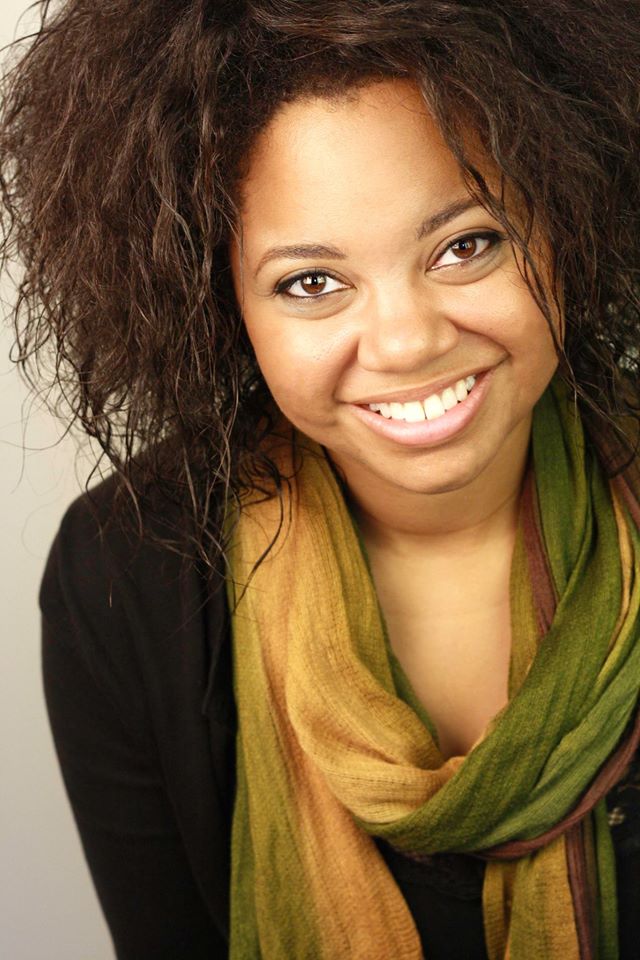
Meet the Cast and Director of The Second Shepherds' Play
The Second Shepherds' Play is just about a week away! Meet the folks who are bringing it to life!


Sunday, November 29, 2015
Second Shepherds' Play: Director's Notes
Character transformation makes for good drama, and while you might expect a medieval Christmas play to present characters as two-dimensional cartoons, the characters we meet in The Second Shepherds' Play are remarkably human. We all have a unique perspective of the universe that shapes our distinct points of view, and the characters in this play are no different: each clearly defines their point of view on their first entrance. These perspectives shift and evolve in only a few short pages as we see these characters transform and respond to the world around them.
These transformations anchor the action of the play and set the stage for the biggest transformation of all: The birth of Christ and the salvation of humanity. A transformation of this magnitude was made possible only by the goodwill the Shepherds show Mak after the theft of their sheep. The shepherds' act of grace and forgiveness was proof for God that the world could change for the better, and that such a change would start at the lowest rungs of society. This was why the Shepherds were chosen to witness the birth of Jesus.
I, too, transformed while directing this play. I began my process believing this production worked best as a farce, full of simple characters and base jokes. But while a clownish interpretation of the text is possible, working with the cast individually revealed support in the text for the deeper, more significant character transformations mentioned above. By the time I started working with the cast, many of their ideas and choices were already firmly rooted in the text and I took on the role of gardener, cultivating and curating these ideas into a cohesive production: they helped me see that what I had taken for a simple comedy was a far cry from simple, and the intrinsic humanity of the people of mid-15th century Wakefield speak to us across barriers of time and language.
Christmas is not only a season of joy and miracles, it's also a time of transformation. As you take part in tonight's performance, consider your own unique perspective of the universe and how three shepherds and a couple of thieves might reshape that distinct point of view.
These transformations anchor the action of the play and set the stage for the biggest transformation of all: The birth of Christ and the salvation of humanity. A transformation of this magnitude was made possible only by the goodwill the Shepherds show Mak after the theft of their sheep. The shepherds' act of grace and forgiveness was proof for God that the world could change for the better, and that such a change would start at the lowest rungs of society. This was why the Shepherds were chosen to witness the birth of Jesus.
I, too, transformed while directing this play. I began my process believing this production worked best as a farce, full of simple characters and base jokes. But while a clownish interpretation of the text is possible, working with the cast individually revealed support in the text for the deeper, more significant character transformations mentioned above. By the time I started working with the cast, many of their ideas and choices were already firmly rooted in the text and I took on the role of gardener, cultivating and curating these ideas into a cohesive production: they helped me see that what I had taken for a simple comedy was a far cry from simple, and the intrinsic humanity of the people of mid-15th century Wakefield speak to us across barriers of time and language.
Christmas is not only a season of joy and miracles, it's also a time of transformation. As you take part in tonight's performance, consider your own unique perspective of the universe and how three shepherds and a couple of thieves might reshape that distinct point of view.
Subscribe to:
Posts (Atom)